The retirement landscape in Britain is experiencing a seismic shift. As we navigate the evolving economic, social and legislative environment of 2025, a powerful convergence of factors is reshaping how we approach later life – and where we choose to live it. This transformation represents not merely a housing trend, but a fundamental reimagining of what retirement can and should be.
This change is also influenced by the UK-wide campaign initiated by The Associated Retirement Community Operators (ARCO) in early June this year, called ‘Generation Joy’. The campaign seeks to increase awareness of Integrated Retirement Communities (IRCs), address public misconceptions, and share perspectives from individuals living and working in IRCs to provide balanced information about life in later years.
LMS Retirement Living CEO, Karl Hallows, lays out what the future may hold..
The Perfect Storm: Demographic, Financial and Legislative Forces
Recent data in the Financial Times reveals a compelling story of change. Downsizing (or Resizing to meet a new chapter in later life ) activity surged by 37% in the year to April 2025, with 133,400 purchases by those moving to smaller homes. This represents a dramatic reversal from the steady decline witnessed in previous years, when downsizers numbered just 97,353 in the year to April 2024.
The drivers behind this resurgence are multifaceted and interconnected. Falling mortgage rates, which dropped from 5.58% to 4.93% in the past year, have provided downsizers with greater confidence in securing optimal prices for their properties. More significantly, the upcoming changes to inheritance tax legislation are accelerating decision-making processes across the nation.
From April 2027, defined contribution pensions will be included in estates for inheritance tax purposes for the first time, potentially affecting over 49,000 additional estates. Combined with the extension of inheritance tax to business and agricultural property from April 2026, and the freezing of inheritance tax thresholds until 2030, these changes are creating what industry experts term “the great wealth transfer acceleration”.
The Financial Liberation of Strategic Downsizing
The economics of downsizing paint a compelling picture. Analysis shows that 1.29 million owner-occupiers aged 65 and over living in four-bedroom properties could unlock an average of £305,090 by moving to two-bedroom homes. This translates to a potential monthly income boost of £1,218 for the remainder of their lives and freeing up such existing homes for larger families.
In the year to April 2025, downsizers released £21.8bn of equity, typically representing one-third of their previous home’s value. Property owners transitioning from five-bedroom to three-bedroom properties realised an average profit of£498,687 before moving costs. These figures represent more than mere financial transactions – they represent the unlocking of life possibilities.
However, the benefits extend far beyond the initial equity release. Smaller properties deliver ongoing monthly savings through reduced utility bills, lower council tax, and decreased maintenance expenses. Modern retirement developments often feature energy-efficient systems that further reduce running costs, creating a compound benefit of both lump-sum equity and improved cash flow.
The Castle View Model: Redefining Retirement Living Excellence
At Castle View Retirement Living, we witness daily the transformative power of integrated retirement communities. Our development, which earned recognition as ‘The UK’s Most Outstanding Retirement Living Development’, embodies a philosophy that retirement should be a time of vibrancy, not decline.
The IRC model exemplifies the progression of retirement living. In contrast to traditional retirement housing or comprehensive care facilities, IRCs provide fully independent residences complemented by 24-hour onsite staff, resident-led activities and events, food and beverage offerings, optional wellbeing and care services, and a broad range of communal amenities. This approach aligns with the preferences of today’s retirees, enabling them to maintain independence while enjoying exceptional service and convenient access to support as needed.
The Health and Wellbeing Revolution
The health and wellbeing benefits of integrated retirement communities are transformative and measurable. Research demonstrates that IRC residents experience a 75% increase in exercise levels, while enjoying reduced GP, nurse and hospital visits by 38%. Perhaps most remarkably, only 8.7% of IRC residents require transition to residential care homes, despite often having higher care needs upon arrival.
The social benefits are equally compelling. Just 1% of IRC residents report feeling isolated, compared to significantly higher rates in the general population. This dramatic reduction in loneliness and isolation contributes to extended life expectancy, with female residents enjoying up to five years additional life expectancy compared to the wider population.
Beyond Individual Benefits: The Societal Impact
The growth of integrated retirement communities delivers benefits that extend far beyond individual residents. Each retirement community move typically releases a family-sized home, with nearly 3.5 million older people expressing interest in downsizing to retirement properties. If the sector achieves its goal of housing 250,000 people by 2030, over 562,500 bedrooms will be released into the general housing market
The economic impact is equally significant. The sector’s growth trajectory suggests turnover exceeding £70 billion by 2030, requiring £40 billion in investment. More importantly, this expansion will deliver £5.6 billion in savings for the UK’s health and social care system.
These savings arise from reduced healthcare utilisation, earlier hospital discharge facilitated by onsite care availability, and the prevention of premature care home admissions. The efficiency gains are substantial – IRC provision reduces care needs for up to 20% of homeowners while eliminating travel time for care workers, freeing up approximately 20,000 care staff positions.
The Supply Challenge: Meeting Unprecedented Demand
Despite this compelling value proposition, the UK continues to experience a critical shortage of retirement housing. Current projections indicate a deficit of between 31,500 and 45,900 units over the next five years, with demand accelerating as the over-75 population increases by 38% by 2040.
The scale of unmet demand is striking. While approximately 3.1 million people aged 65 and over express desire to downsize, they face barriers including lack of suitable properties and moving costs. The sector currently provides housing for just 0.6% of the over-65 population, compared to 6.1% in the United States and 5.4% in New Zealand.
Looking Forward: The Investment Imperative
As we look toward the remainder of this decade, the convergence of demographic pressures, legislative changes, and evolving lifestyle expectations creates an unprecedented opportunity. The planning pipeline shows promise, with 244 new applications submitted in 2024 potentially delivering over 16,000 new homes. Currently, 30,000 seniors’ homes are in the pipeline, with 13,000 under construction.
Achieving the sector objective of constructing 30,000 – 50,000 new retirement homes each year necessitates ongoing collaboration among developers, investors, and policymakers. The integrated retirement community model, as demonstrated by projects such as Castle View, offers a holistic lifestyle solution designed to meet the evolving requirements of contemporary retirement living.
The Castle View Vision: Quality Without Compromise
At Castle View, our commitment extends beyond providing homes to creating a lifestyle that celebrates the richness of later life. Our contemporary apartments which are available to buy or rent, range from sophisticated one-bedroom units to spacious three-bedroom homes, are designed for independence with support readily available.
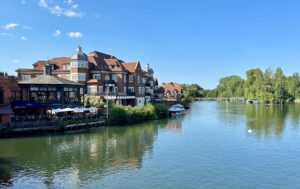
Our facilities – from the Sky Lounge with Windsor Castle views to our professional-standard bistro and multiple social spaces – create an environment where homeowners don’t just live, but thrive. The availability of wellbeing and regulated care provides them with confidence that support will be available when needed, while our 24-hour staffing ensures customer care, security and peace of mind.
The path forward is clear. As inheritance tax changes accelerate wealth transfer considerations and demographic pressures intensify, the integrated retirement community model represents the optimal solution for individuals seeking to maximise their later-life experience while contributing to broader societal benefits. The key issue is how fast we can create infrastructure to meet growing demand and make it affordable for everyone.
The future of retirement living is not about downsizing dreams – it’s about upsizing possibilities. At Castle View and across the sector, we’re not just building homes; we’re creating the foundation for Britain’s retirement revolution.
Sources:
- Castle View Windsor
- Financial Times
- Property Saviours
- SNF Financial
- Maidenhead Advertiser
- Knight Frank
- Retirement Villages
- Churchill
- HousingLin
- Real Asset Insight
At Castle View, we’re proud to be leading the way – showing that retirement is just the beginning of something joyful.
Learn more about life at an IRC…contact our Later Life Adviser, Nicky King:
E: nicky@castleviewwindsor.co.uk
T: 01753 378127